← Back to Blog
The Amboseli elephants
Amboseli National Park in southern Kenya, just north of the Tanzanian border, is home to the most famous free-ranging elephant population on Earth. Unlike many African elephant populations, Amboseli's herds have been intensively studied and protected for over 50 years — since 1972, when Cynthia Moss established the Amboseli Elephant Research Project. Every elephant in the population is individually identified and tracked, and the research has produced much of what we now understand about elephant social behaviour, matriarchal leadership and long-term memory.
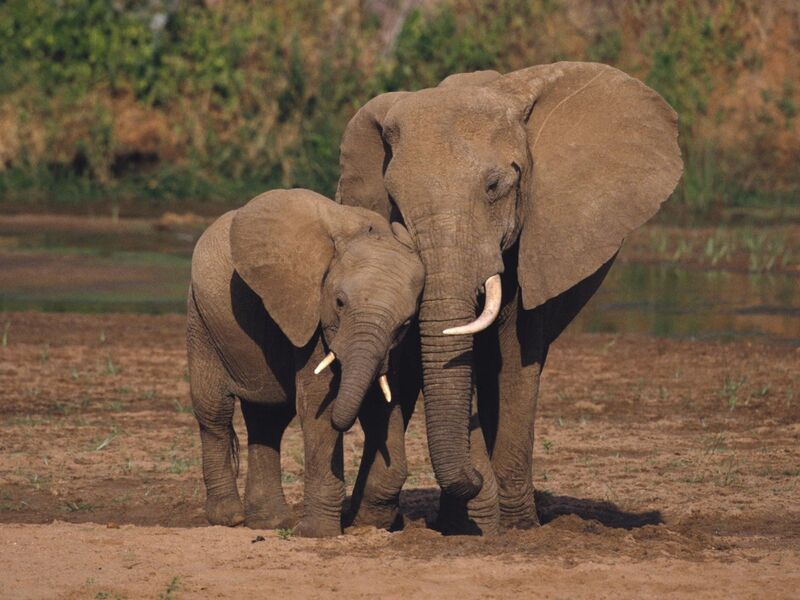
The practical consequence for visitors is that Amboseli's elephants are relatively relaxed around vehicles. They've grown up with safari traffic and human researchers, they are not harassed, and they are not hunted. You can watch entire family groups moving calmly across the plains, babies playing, matriarchs leading the herd to water, old bulls displaying — at close range, in open landscapes, with Kilimanjaro as the backdrop. It is one of the most profound wildlife experiences available anywhere.
The tuskers: why size matters
Amboseli is one of the last places on Earth where you can reliably see 'big tuskers' — old bulls with tusks that sweep the ground. Ivory of that size has been almost completely poached out elsewhere in Africa. Amboseli's protected status, combined with the bulls' habits of spending time in the core of the park, has preserved a handful of these animals into their 50s and 60s.
The most famous Amboseli tuskers have been named (Tim, Craig, One Ton and others), and conservationists track them closely. Sadly, some have now died of natural causes, but the next generation is coming through. Seeing one up close is a genuine privilege — these are the last representatives of an old Africa that has almost vanished elsewhere.
The Kilimanjaro backdrop
The other reason to go to Amboseli is the view. Mount Kilimanjaro (5,895m), Africa's highest mountain, rises immediately across the Tanzanian border. On a clear morning it dominates the southern horizon — a snow-capped dome above the dry Amboseli plains.
Cloud cover is the enemy. Kilimanjaro is often obscured by mid-morning cloud, even in the dry season. The best views are at sunrise and, less reliably, at sunset. Serious photographers set up well before first light, watch the mountain emerge from darkness as the sky reddens, and capture the brief window when the light strikes the snowfields from the east.
The classic shot — elephants in the foreground, Kilimanjaro behind, dawn colour in the sky — is one of the most iconic wildlife images in photography. It can only really be taken in Amboseli. On a good day, with a cooperative elephant herd, you can tick it off the list in the first morning.
Beyond elephants: what else is in Amboseli?
Amboseli is famous for elephants but is in no way an elephants-only park. Lion populations are strong, cheetahs are present in good numbers, and the open plains make big-cat sightings relatively easy. Spotted hyenas, jackals, and servals round out the predator list. Leopards are present but rare.
Plains game is abundant: zebra, wildebeest, Thomson's and Grant's gazelle, giraffe, and waterbuck. The swamps fed by underground springs from Kilimanjaro attract hippos, and the birdlife around the water is excellent — pelicans, crowned cranes, flamingos, fish eagles, herons, and an astonishing diversity of waders and waterbirds.
Lake Amboseli itself is usually dry for most of the year, but when it fills after heavy rains the lake attracts flamingos and transforms the landscape into something completely different.
When to visit
The dry seasons — June to October, and January to February — are the prime windows. Water sources concentrate the wildlife around the swamps, game viewing is excellent, and Kilimanjaro views are most reliable.
The green seasons (March-May and November) are beautiful in their own way. The landscape turns green, migrant birds arrive from Europe and northern Africa, and crowds thin dramatically. The downside is that Kilimanjaro is more often hidden in cloud and some game tracks can be muddy.
Our preference is August-September: classic dry-season game viewing, best Kilimanjaro visibility, manageable heat. Or late January if you want to combine with the southern Serengeti calving season.
How long do you need?
Amboseli is compact. Two or three nights is enough for most visitors — long enough for four or five game drives across the park's different habitats, a couple of dawn sessions for the Kilimanjaro shot, and a visit to Observation Hill or the Maasai community villages outside the park gates.
If you're specifically on a photographic mission, give yourself an extra night to improve the odds of a cloud-free dawn. Weather-dependent photography always rewards patience.
Combining Amboseli with other destinations
Amboseli is rarely visited on its own. The classic combination is Amboseli → Masai Mara, with a light aircraft transfer to save the long drive. This gives you the iconic elephants and Kilimanjaro views, then the Migration (in season) and Big Five density of the Mara. Seven to nine nights is ideal.
Other options: Amboseli → Tsavo (more elephants, red ones) → coast. Or Amboseli → Lake Nakuru → Masai Mara for a broader Rift Valley itinerary. Amboseli is also a popular starting point for travellers flying into Jomo Kenyatta or Wilson airports — the park is a relatively short flight from Nairobi.
If you're on a tight schedule and can only do one Kenyan destination, our answer is still the Masai Mara. But if you can do two, Amboseli is the classic second choice and adds something the Mara cannot.
The Maasai community
Amboseli is surrounded by Maasai group ranches — community-owned land where traditional Maasai pastoralists live and graze their cattle. A significant proportion of Amboseli's wildlife-tourism revenue supports these communities through employment, conservancy fees, and community projects. Visiting a traditional Maasai village (a 'boma') is almost always included in Amboseli itineraries and, when done respectfully, is a genuine cultural exchange rather than a tourist show.
Ask your guide to take you to a community-run village rather than a purely commercial one. The experience is warmer and your money goes where it should.
Final word
Amboseli is small, compact and unmistakable. If you care about elephants — and most safari-goers quickly do — it is the single most rewarding park in East Africa to visit. The combination of enormous old bulls, relaxed family groups, open plains, and Kilimanjaro as a constant backdrop is genuinely unique. No other destination offers anything like it.
We can build Amboseli into any Kenya itinerary — get in touch if you'd like to hear how.